
May 17, 2026 • 0 comments
Your cart is empty
Start Shopping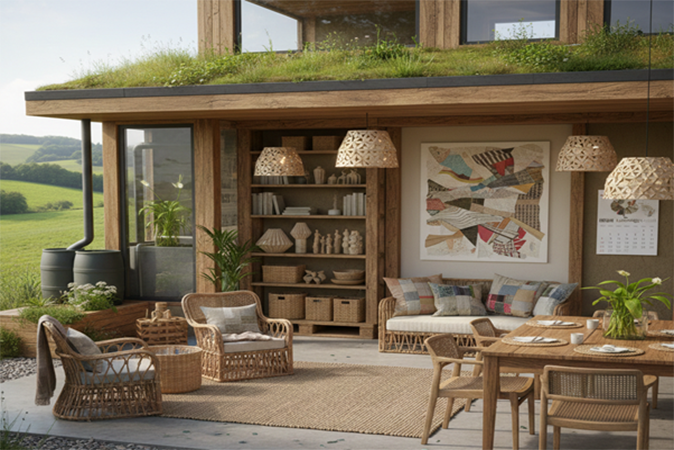
In most homes today, objects arrive quietly and leave even more quietly. A new basket, a storage box, a kitchen organiser - purchased, used, replaced. What happens before they reach us, or after they leave, is rarely questioned. The circular economy concept asks us to pause that habit of forgetting.
Inside a home, a circular economy is not an abstract environmental theory. It is visible. Tangible. Everyday. It shows up in the materials we touch, the way objects age, and how long they are allowed to stay useful.
From Linear to Circular: A Shift in Thinking
The traditional economy works in a straight line: take resources, make products, discard them. Homes built on this system slowly fill with things designed to wear out - cheaply made, difficult to repair, impossible to reuse.
A circular economy works differently. It begins by asking a simple question: Can this material live more than one life?
Inside a circular home, products are designed with their entire journey in mind, from sourcing and production to use, reuse, and return to the ecosystem. Waste is not an endpoint; it is a starting point.
Circular Living Is Visible in Materials
One of the most immediate ways the circular economy enters a home is through material choice. Storage baskets made from invasive water hyacinth. Desk organisers created from recycled plastic. Utility products crafted using discarded textiles or paper waste. These materials are not hidden. In fact, they are celebrated.
Their textures carry irregularities. Their colours are softened by process rather than factory polish. Instead of uniform perfection, they offer honesty. Each piece quietly tells you: I was something else before. This visible transformation is important. It builds awareness every time you use the object. Circular living does not ask you to remember sustainability; it places it directly in your hands.
Design That Respects Time
Circular products are not designed for trends. They are designed for longevity. In a circular home, objects are meant to age gracefully. A basket darkens slightly with use. A recycled material softens, adapts, settles into your routine. Instead of being replaced, it becomes familiar.
This is a quiet rejection of disposability. When products are made well and thoughtfully, you are less likely to discard them and more likely to repair, reuse, or repurpose them. That is circularity at its most intimate level.
The Role of Craft and Human Skill
A circular home is rarely filled with anonymous objects. Behind many pieces are skilled hands - artisans who understand materials deeply because they work with them slowly. Handcrafted circular products often use low-energy processes. They rely on skill instead of machinery, precision instead of excess. This reduces environmental impact while preserving livelihoods.
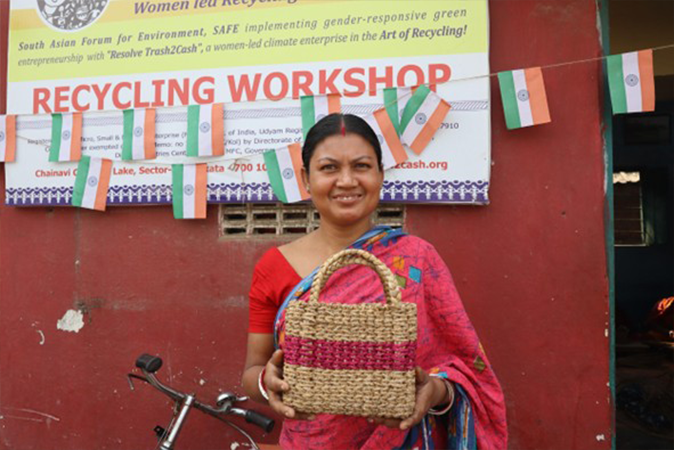
At Resolve Trash2Cash, circular economy is practiced not only through material recovery but through people. Waste is transformed into products, and craft becomes a means of financial stability and dignity. Inside a home, this connection matters. You are not just buying a product, you are participating in a system that values both the planet and people.
Circular Economy in Daily Habits
Circular living does not stop at what you buy. It continues in how you use it. Choosing multi-functional products. Repurposing storage baskets instead of discarding them. Passing objects forward rather than throwing them away. Composting organic waste. Separating recyclables.
A circular home encourages mindfulness without demanding perfection. It understands that sustainability is built through consistency, not extremes.
Redefining Comfort and Luxury
Perhaps the most beautiful shift a circular economy brings into a home is a change in how luxury is defined. Luxury stops being about excess and starts being about intention. About knowing where something comes from. About choosing fewer, better things. About living in spaces that feel calm, grounded, and meaningful. A circular home does not feel bare. It feels considered. It is a home where objects are allowed to matter.
Please log in to leave a comment.
Sign In
May 17, 2026 • 0 comments

Feb 23, 2026 • 0 comments
Feb 23, 2026 • 0 comments
Feb 23, 2026 • 0 comments
Comments 0
Be the first to comment!